Broader Testing in AYAs Helps

PhD candidates Jeffrey van Putten and Lina Lankhorst investigated whether AYAs (adolescents and young adults, diagnosed with cancer between the ages of 18 and 39) should be treated differently from older adults. In their review in Cancer Treatment Reviews, they examined 104 studies and 38 reviews that compared AYAs with other age groups at the genetic level.
This article was published in an expanded form on November 6, 2025 in Medische Oncologie(in Dutch)
They found substantial differences in how studies were conducted. Some studies took a broader approach, for example by examining the entire genome. “International age limits for AYAs also vary by cancer type, because they are primarily based on care needs. Whether there is a general biological boundary—and whether it is the same for all cancers—remains unclear.”
The researchers also observed that certain cancer types are more common in AYAs than they are actually studied. According to Van Putten, this wide variation in research methods is an important finding.
A notable point is the difference in the use of molecular diagnostics. In the Netherlands, children often undergo very broad diagnostic testing, including whole genome sequencing (WGS), a method in which the entire DNA of the tumor is analyzed. This is done much less frequently in adults. Van Putten wonders why this difference exists, since broad genetic tests such as WGS could also provide valuable information for AYAs. For example, there may be specific gene fusions or mutations with treatment implications that can only be detected with comprehensive testing, not with targeted approaches.
For this reason, Lankhorst and Van Putten advocate for broader genetic testing in AYAs, including analyses of RNA, protein expression, and germline alterations. They cite the example that MMRd (mismatch repair deficiency) occurs more often in AYAs than in older adults. This may mean that more young patients are eligible for immunotherapy—but only if active testing is performed.
With their work, the researchers hope to contribute to more personalized care for young adults with cancer. As part of the KWF-supported GENAYA project, one thousand AYAs will undergo WGS analysis to identify better treatment options and gain more insight into the DNA characteristics of this group.
According to Lankhorst, this is crucial because AYAs are in the midst of building their lives—forming new relationships, developing careers, or starting families—and for them, a new treatment option “can make a world of difference.”
More information
You read an article in the category Personalized treatment. You may also be interested in Learning healthcare system, Molecular diagnostics, or Whole genome sequencing.All news
Also read
Towards a learning healthcare system by broad collaboration
Developing a new drug is expensive and takes a long time. In addition, there is only a slim chance that …

Whole genome sequencing: the future of molecular diagnostics in gynecological cancer?
To mark Gynecological Oncology Awareness Month, we spoke with oncologist Eelke Gort about the role of molecular diagnostics in these …
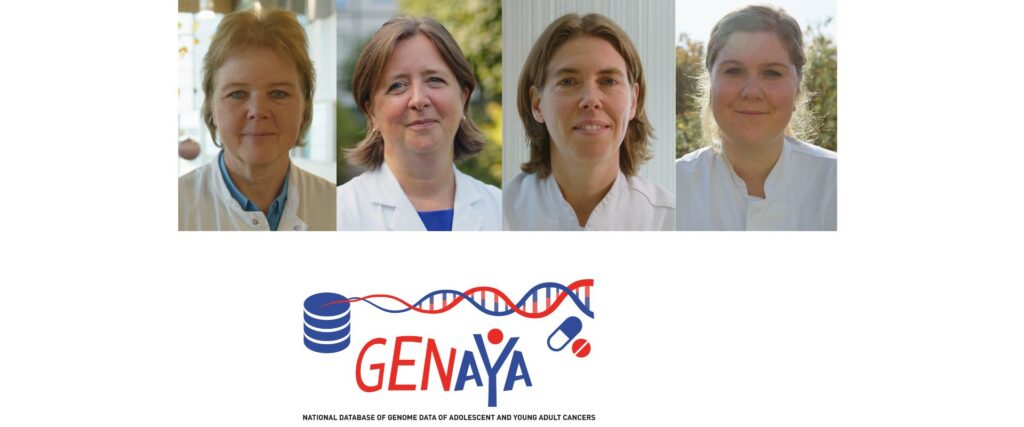
Healthcare providers share insights about GENAYA for young adult cancer patients
In a series of short videos, our specialists share their insights on the GENAYA project. They explain what GENAYA is, …
The number of WGS samples Hartwig Medical Foundation has is quite unique in the research field and is rapidly growing. It amounted to 3.500 samples when we started and it’s already over 5.000 now.