A Learning Healthcare System for Better Cancer Research and Care
Vast amounts of data are generated during cancer diagnosis and treatment every single day. Tissue samples are analyzed, data about the tumor genomes is acquired, treatments are prescribed, and outcomes are monitored.
The insights this data provides are valuable for individual patients, but – while respecting patients’ rights and choices regarding the use of their data – also has potential to drive research and innovation to improve care for future patients. Improving this ‘data loop’ is a shared mission for Hartwig Medical Foundation and the Oncode Accelerator Patient Cohorts Platform. Together, they aim to transform routine cancer care into a learning healthcare system that accelerates research, improves treatment decisions, and delivers better cancer care for future patients.
One day, we could have a learning healthcare system where every patient helps improve cancer care for the next. That is a vision that Hartwig Medical Foundation and the Oncode Accelerator Patient Cohorts Platform share. They collaborate to connect data across the full course of cancer care, including longitudinal clinical and outcome data, genomic information and quality-of-life data, so that it can both guide diagnosis and treatment and advance research and development of new therapies.
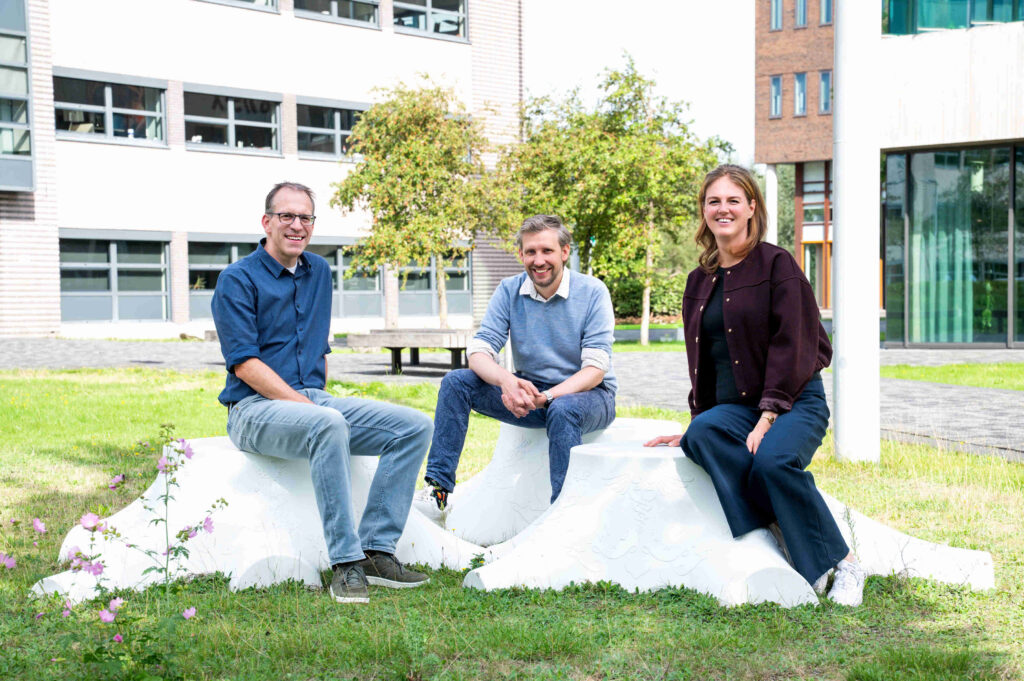
We spoke to Paul Roepman (Clinical Molecular Biologist, Hartwig Medical Foundation), Joep de Ligt (Database Lead, Hartwig Medical Foundation), and Elise Rinzema (Program Manager, Patient Cohorts Platform of Oncode Accelerator) to learn more. “Each of us contributes a different piece of the puzzle,” explains Elise.
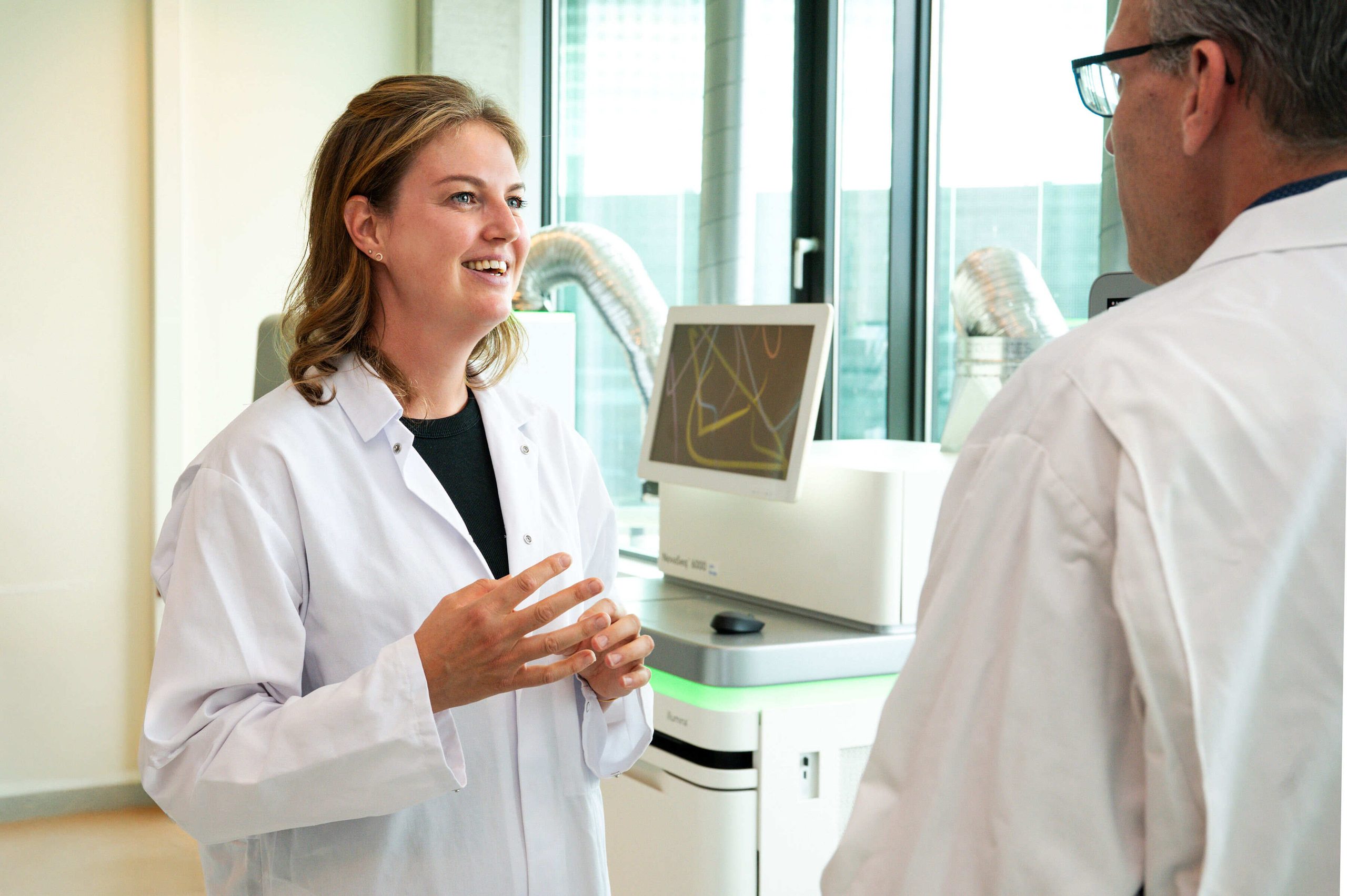
The Patient Cohorts Platform brings together 12 national oncology cohorts, which collect high-quality clinical data and biomaterials from cancer patients across the Netherlands. Hartwig Medical Foundation specializes in complete genomic profiling of the cancer and translating this complex molecular data into information that is meaningful for doctors, patients, and researchers. Paul adds, “Hartwig Medical Foundation is a technology institute. We rely on partnerships with hospitals – and preferably at scale like with the Patient Cohorts Platform, because the numbers matter.”
From Routine Care to a Learning Healthcare System
“In every hospital there is so much data available. Ideally you can get insights from it to improve research and future healthcare, then improve treatments for current patients, and then learn again from the patients receiving the improved treatments,” says Elise.
“But research and routine care often operate separately. Bringing them together requires coordination and trust.”
For example, diagnostic information helps guide decisions for individual patients, but its potential to generate new insights and improve treatments for future patients is not always fully realized. While clinical trials will remain key for the development of new treatments, a learning healthcare system aims to complement them by learning systematically from all patients receiving care in everyday clinical practice.
“In an ideal situation, you learn from every patient,” says Paul.
“In a learning healthcare system, we want to know whether a treatment worked, for whom, and why. Those insights should feed back into research and care so we can learn from our successes and mistakes and improve care for future patients.”
Closing the Data Loop
Closing this data loop between care and innovation is a necessary step toward creating a learning healthcare system. “It is about ensuring that data generated during care makes it back to feed into research, clinical trials, and re-evaluation of drugs,” explains Joep.
“For example, data from different hospitals about how long patients survive after a certain treatment needs to be collected, centralized, and analyzed to find out how well the treatment worked. And then the findings of that re-evaluation should cycle back into treatment guidelines.”
Paul and Joep share two examples that show how this feedback loop can benefit patients. The first example is the case of PARP inhibitors, a treatment for patients with breast or ovarian cancer. “Traditionally, PARP inhibitors were thought to work best for patients with breast or ovarian cancer with mutations in the BRCA genes. This was also reflected in their drug label,” explains Paul.
“But by analyzing whole genome sequencing data from patients, we learned that PARP inhibitors work well against tumors that have a large number of DNA breaks, which can be, but are not exclusively, caused by defects in BRCA genes. PARP inhibitors work less well for tumors that don’t have many DNA breaks, even if they do have a BRCA mutation.” This new understanding will help doctors make better treatment decisions in the future, and adjust drug labels.
A second example is Cancer of Unknown Primary (CUP): cases where cancer has spread but its origin can’t be identified. This used to mean there was no standard treatment available, because treatment regimens, including chemotherapies, are matched to the original tumor site.
“Using whole genome sequencing data, we can now get a better understanding of where the primary tumor is in about three out of four patients with CUP,” Paul explains.
This approach, which is now reimbursed in Dutch care, opens up treatment possibilities for patients who otherwise had none.
Where the Data Loop Still Breaks
For researchers to draw conclusions, both biological samples and clinical information must meet high quality standards. For biological samples, the method of collection and storage is key. For example, routine histopathology requires sample processing using formalin fixation for microscopic investigation – but this process damages DNA, making those samples less suitable for genomic analysis.
Data from biological samples and associated clinical data from the same patient also need to be linked, so that it is clear which samples come from which patient.
When it comes to clinical data, it’s important for information to be recorded in a way that is accurate, complete, and standardized. “If survival or treatment data is inaccurate or incomplete,” Joep explains, “researchers risk drawing the wrong conclusions.”
Data standardization is also critical to ensure that data from different hospitals can be combined effectively. “We all need to speak the same language,” says Elise. “By being able to combine different datasets, the data becomes much more valuable.” For instance, data standardization makes it easier to study rare cancers for which the total amount of data is very limited. Making data from different sources compatible so it can be easily combined and analyzed can bring together information from enough patients in the Netherlands, or globally, to generate meaningful evidence.

Making Complex Data Understandable
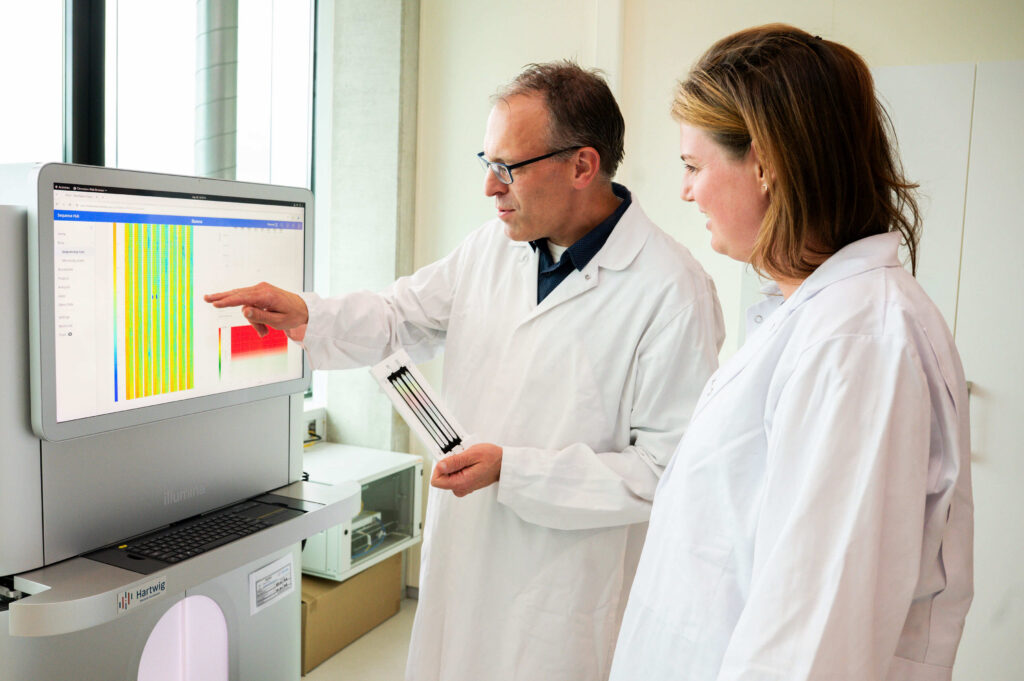
Each whole genome sequencing dataset contains a vast amount of information. Paul comments: “Part of my role is to make sure that the generated genomic data and results are in line with what hospitals need, want, and can cope with, to support – and not confuse – doctors in having a useful discussion with their patients in the consultation room. We typically report and prioritize results for a subset of about 500 cancer-related genes and genome-wide markers, such as tumor mutational burden and microsatellite instability, to make the amount of information manageable.”
Why only report these selected markers and treatment-associated findings, and not everything? “If you were to try to take a look at all the data generated from whole genome sequencing, that would take days for even an expert,” explains Joep.
“We need Paul’s team to help us define what’s clinically relevant. For example, if the number of genetic mutations is predictive of whether an immunotherapy will work for a patient, that’s important information. But a clinician doesn’t want to see a raw number, they want to know: will this therapy help my patient?”
To help researchers and clinicians navigate those large datasets and answer practical questions like which therapy will work for which patient, Joep’s team at Hartwig Medical Foundation is developing new tools, such as AI assistants that help researchers and doctors use the available data to answer their questions.
Importantly, these data analysis and visualization tools are designed with privacy in mind. “Our AI assistant helps answer questions based on the data that is available, but it never accesses patient data directly,” explains Joep. This ensures compliance with strict data protection requirements and honors the patients’ consent and right to withdraw their data. The aim is to make the data easier to analyze without compromising security or patient privacy.
Building the Future Together
Closing the data loop requires top technology and expertise, but also trust and collaboration. Standardizing data, aligning systems, and creating common frameworks across so many diverse partners can be painstaking work, but the potential rewards are great.
Individually, Hartwig Medical Foundation and the Patient Cohorts Platform each have different pieces of the puzzle. But together, they can close the data loop and build a healthcare system where every patient contributes to better care for the next.
Hero photo: LaloesFotografie
You read an article in the category Personalized treatment. You may also be interested in Algorithms, Billing code, Biomarker, Cancer of Unknown Primary, DNA, End of Treatment, Hartwig Medical Database, Hartwig Medical Foundation, Learning healthcare system, Molecular diagnostics, OncoAct, Rare cancers, Re-use data or Research.All news
Also read

Hartwig Medical Foundation adapts working method and continues work
In this uncertain time when we are trying to prevent the spread of the Coronavirus, we have adapted our working …
Join us for an evening of Healthcare Tech innovation with Hartwig Medical Foundation and GCUG
Calling all software developers and tech enthusiasts 🚀 Hartwig Medical Foundation partners with Google Cloud User Group (GCUG) to bring …

New research shows a more significant role of genetic predisposition in adults with glioblastoma
A recent study published in npj Genomic Medicine shows that hereditary predisposition in adult glioblastoma patients is more common than …

Personalised selection of experimental treatment in patients with advanced solid cancer is feasible using whole-genome sequencing.