Health ReWireD accelerates personalized care for patients with cancer
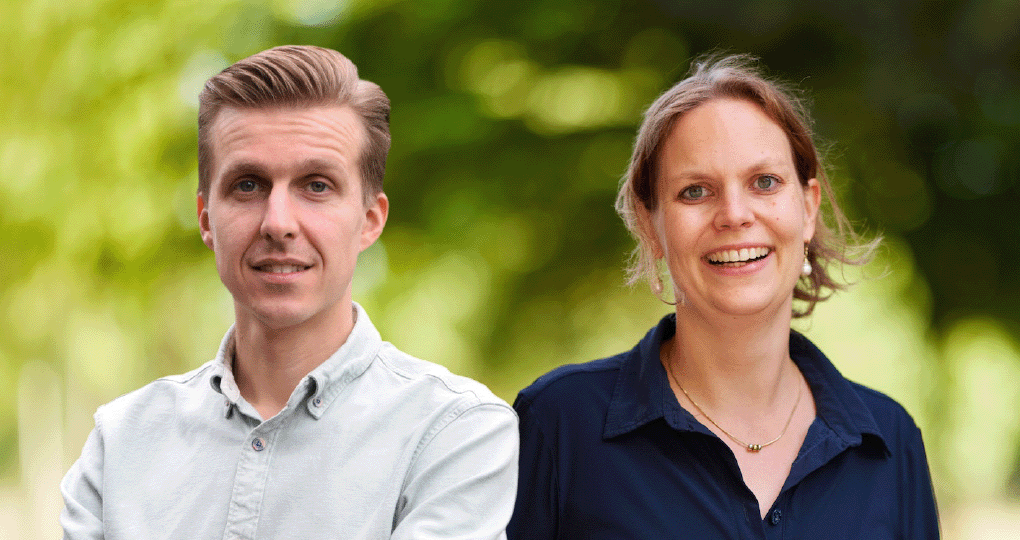
Health ReWireD demonstrates how we can better utilize data to provide tailored care to patients. For this to happen, the foundation must first be right. That starts with healthcare data being properly documented. Internist-oncologists Dr. Hilde Nienhuis (UMC Utrecht and Hartwig Medical Foundation) and Dr. Robert Jan Kwakman (UMC Utrecht and vice-chair of PLCRC) share how they are handling this.
Making better use of data for high-quality personalized care allows patients to receive the best possible treatment while enabling us to gain new insights for the future. That is a valuable goal, but how do you achieve it? Not by just talking about it, according to Hilde Nienhuis. “Often it stops there. There are initiatives, but they frequently focus on using data for purposes other than direct patient care. In doing so, you skip the foundation: the source where the data originates.”
In brief
- Health ReWireD aims to provide personalized treatment advice to every cancer patient.
- The project focuses on patients with colorectal or lung cancer.
- It is a collaboration between the regional cancer care network Oncomid, Hartwig Medical Foundation, and IKNL.
- The objective is an effective way to collect and share data. This allows patient data to be used for patient treatment, care evaluation, and research.
Health ReWireD aims to offer personalized treatment advice to every patient by learning from every patient. The project originated in a unique way. Robert Jan Kwakman explains: “The initiators of PLCRC, the Prospective Dutch Colorectal Cancer cohort, wanted to conduct research with routine care data together with Hartwig Medical Foundation. However, they could not directly answer the research question properly because the data was not recorded adequately. Realizing this needed improvement was the catalyst for Health ReWireD.”
The project initially focuses on colorectal and lung cancer. “These are common types of cancer,” Nienhuis explains. “So there are many patients. This means we can make a difference quickly through better data utilization.” For colorectal cancer, data is already being collected within PLCRC.
Which data are needed?
To extract essential data from electronic health record systems (EHRs) – the digital system in which hospitals and healthcare providers track all medical records of a patient – it must first be clear which data are needed and for what purpose. “Currently, we have to do this afresh for every research question, manually extracting variables for a specific group of patients from the EHR,” says Nienhuis. “Added together, that is a tremendous amount of work. To keep the effort manageable and organize it effectively, we are starting within the Oncomid network.”
All hospitals participating in Oncomid have designated an oncologist. These oncologists work together to compile a list of the most critical data required. Such a list is called a minimum clinical dataset, established using the Delphi method.
Hartwig Medical Foundation funds the project management. Nienhuis: “This aligns with its goals and vision: learning from every patient. Therefore, we want to use clinical care data to improve care for future patients. It is also important to have DNA research data alongside data on disease and treatment. That helps when we later want to conduct research and evaluate healthcare quality.”
“This aligns with goals and vision from [Hartwig Medical Foundation]: learning from every patient. Therefore, we want to use clinical care data to improve care for future patients”. dr. Hilde Nienhuis
DNA changes can occur at different moments and in various ways during life. This can happen, for example, due to exposure to UV radiation from the sun or smoking, but errors can also occur spontaneously during cell division. These DNA alterations can play a role in the onset and development of cancer.
IKNL is also participating in the project. “The project manager for Health ReWireD works for IKNL as well,” says Nienhuis. “IKNL has long collected data on patients and their treatment. We ultimately want to use those data to compare healthcare across different hospitals. IKNL has extensive experience in that area.”
Properly recording data
Automatically reusing data from the EHR for research to evaluate care is technically complex. Nienhuis: “First, we need to know where all data are located within the EHR. That is why we started mapping data in two Oncomid hospitals. Some data can be mapped well and are already structured in the system, but that is not true for all data. In those cases, we must ensure that those data are also recorded in a standardized manner. Sometimes this can be done via search queries in the EHR, as currently done in IKNL’s RONDA project (Realtime Oncology Data).”
More is needed. Kwakman: “We also need to engage with EHR software vendors. Clinicians currently enter data in multiple places and repeatedly type information. We need to reduce this administrative burden. Consequently, adjustments to the EHR will be necessary in every hospital.”
“We need to reduce this administrative burden”, dr. Robert Jan Kwakman
Nienhuis adds: “The European Health Data Space imposes requirements in this area. But we must also investigate within hospitals how we can improve data entry by structuring it on the backend of the system. We are exploring whether AI can help with this. While there are no fixed guidelines for this yet, we can test whether it works and is reliable.”
Hospitals eager to join
Considerable work is required for Health ReWireD. “The initial idea was to start on a small scale,” says Kwakman. “We want to test if it works first. If successful, we hope to scale up quickly.”
He notes great enthusiasm in the field. A number of centers have already signed up to participate. Additionally, several hospitals outside Oncomid participated in the Delphi consensus round, where experts provide feedback over multiple rounds to reach agreement on the essential data required.
During this process, they helped build the list of essential data. That list was partly designed to build support among oncologists, as they will be more willing to record data if the purpose is clear.
The Dutch Society for Medical Oncology (NVMO) is also deliberating on this list. “This is also being discussed at the IZA Roundtables,” says Nienhuis. These are Integrated Care Accord (IZA) consultations in which healthcare providers, hospitals, and patient representatives make agreements on organizing care better, including care quality and inter-hospital collaboration. “That is why we have already shared our list; we naturally want to prevent multiple competing lists from emerging.”
High-quality and secure data
Automating data collection raises questions regarding data quality and security. “We must validate that the data is accurate,” Nienhuis says. “In the RONDA project, research was conducted to verify whether diagnosis and treatment data could be reliably automated from electronic health records by checking if automated data matched the original records. We must follow that exact approach.”
Kwakman adds: “We need to compare the automatically extracted data from the EHR against data manually extracted by IKNL data managers—the current standard—as well as against the treating oncologist’s interpretation, which represents the gold standard for the patient.”
According to Nienhuis, this validation must be ongoing. “You have to continuously ensure accuracy. Furthermore, the core dataset needs to be dynamic so it can adapt to new developments.”
For data security, we can draw on procedures established by IKNL and Hartwig Medical Foundation. Nienhuis: “Tools already exist to pseudonymize data before it leaves the EHR. Additionally, IT specialists from hospitals and IKNL can help secure systems, manage user authorizations, and ensure no more data is shared than necessary for the intended purpose.”
Step by step
Both acknowledge that Health ReWireD poses a significant challenge. “Healthcare providers currently make limited use of data to improve care, and we want to change that,” Nienhuis says. Kwakman concurs: “Surgical specialties track and measure treatment outcomes much more effectively, whereas medical oncology lags behind. However, I believe higher data quality will help us learn from one another.”
“Healthcare providers currently make limited use of data to improve care, and we want to change that,” dr. Hilde Nienhuis
Nienhuis shares this view: “Understanding the exact patient population in question and having comparative benchmark data from other hospitals will foster confidence in what we are doing, encouraging active participation from hospitals.”
Nienhuis expects the project to evolve step by step. “I don’t expect us to seamlessly extract all variables from EHRs right away,” she says. “Taking the first step in 2027 is our primary milestone on the horizon.”
And beyond that? Kwakman: “The goal is to have patient data available real-time, fully structured, and complete across Oncomid hospitals by 2030.”
This article is a abridged version of the original article published on October 6, 2026 on PrecisieOncologie.nl, written by Frank van Wijck, MSc, science journalist.
You read an article in the category Personalized treatment. You may also be interested in Hartwig Medical Foundation, Learning healthcare system, Molecular diagnostics All newsAlso read

Nature publication: High resolution DNA-image of metastatic tumor provides new treatment insights
For the first time, Dutch researchers have created a detailed overview of the landscape of DNA-deviations in thousands of metastatic …

Large-Scale UK study confirms clinical value of Whole Genome Sequencing in breast cancer
A recent publication in The Lancet Oncology (October 7, 2025) shows that Whole Genome Sequencing (WGS) is ready for large-scale …
Automatically the right trial and treatment with ACTIN: A new step in cancer care
Imagine you have a patient with cancer sitting across from you: can’t be cured, but he is determined to try …

Hartwig’s unique data set has enriched our understanding of metastatic cancer.