Hartwig advances precision oncology worldwide with oncoanalyser

Nicole Schonrock on scaling precision care for patients with cancer in Australia
Hartwig Medical Foundation has developed powerful software for analyzing molecular data from patients with cancer. Strengthening external collaborations can now make this software available to even more clinicians, helping them provide better care for patients today, says Nicole Schonrock, Head of Partnerships and Clinical Implementation at Hartwig Australia.
Personalized treatment for patients with cancer is central to Hartwig Medical Foundation’s mission. Colleagues in the Netherlands, Australia, and Canada work together on technologies that turn molecular data into clinical insights. After more than ten years of collaboration in high-quality data generation, the development of analytical tools, and database capabilities, each innovation strengthens the overall system and enables better, data-driven care for every patient with cancer.
The oncoanalyser pipeline is a suite of software developed by Hartwig and brought together into a single pipeline in collaboration with partners at the University of Melbourne. It serves as a comprehensive analysis toolkit for researchers and clinicians.
The pipeline can automatically process and analyze patients’ genetic data and identify all relevant molecular events — from simple single-nucleotide variants to complex copy number alterations, signatures, and biomarkers that can help determine which drugs may target the molecular abnormalities identified in a tumor.
Schonrock explains that oncoanalyser was built using an ideal volume of data: the Hartwig Medical Database. It contains data from frozen biopsies from thousands of Dutch patients. Because the biopsies are free from chemical fixatives that can damage DNA and RNA molecules, the data quality is exceptionally high. “We started with the most perfect data you could imagine, and a lot of it,” she says.
The automated processing pipeline of oncoanalyser has already helped dramatically reduce waiting times for patients.
“The software Hartwig has built provides much of the automation that makes very rapid analysis of highly complex data possible,” says Schonrock.
For patients at the Netherlands Cancer Institute (Antoni van Leeuwenhoek, AvL), for example, it now takes just six business days from the time frozen biopsies arrive at Hartwig, through whole-genome sequencing and data analysis, to the point when the results reach the treating physician. “With a turnaround time of just over a week, that patient may be able to receive highly personalized treatment based on the precise genetic makeup of the tumor,” she says.
A flexible, multifunctional solution
In recent years, one of the main goals has been to make oncoanalyser as flexible as possible, says Schonrock. Hartwig’s Australian partners illustrate just how broad that flexibility needs to be. At one end of the spectrum is Zero Childhood Cancer, an initiative of the Children’s Cancer Institute and the Kids Cancer Centre at Sydney Children’s Hospital.
They use oncoanalyser to process whole-genome sequencing data each year for approximately 1,300 children with cancer from 11 pediatric hospitals across Australia and New Zealand. The program aims to make precision medicine the standard of care for children with cancer, and Hartwig is pleased to support them in achieving that goal.
However, whole-genome sequencing remains out of reach for many patients. “The reality is that in Australia, but also worldwide, routine clinical practice generally relies on more affordable gene panels,” says Schonrock.
To help more patients, Hartwig Australia is adapting oncoanalyser for smaller panel datasets. The team is working with several partners that routinely use these panels in patient care.
One of them is Omico, an Australian nonprofit organization that gives patients access to large, comprehensive genomic profiling panels that screen approximately 500 genes for cancer-causing mutations. The goal is to match patients with advanced or incurable cancer to clinical trials. Omico has already helped more than 33,000 Australian patients and processes their panel data through oncoanalyser. “This helps them gain comprehensive insights and, in some cases, additional findings,” says Schonrock.
In addition, a collaboration with the Peter MacCallum Cancer Centre in Melbourne has shown that oncoanalyser is not only effective for solid tumors, but can also serve as an effective pipeline for blood samples from patients with hematologic cancers. “We helped design a 150-gene hematology panel, and they are now running it at scale with oncoanalyser to help thousands of patients each year,” says Schonrock.
Opportunities for gene panels
Although oncoanalyser can support clinicians who use gene panels, Schonrock believes that panel data can also strengthen the dataset in the Hartwig Medical Database. “A large panel with good clinical data and treatment outcomes is powerful,” she says. Analytical frameworks simply need better functionality to integrate and select datasets. For now, the volume of large clinical panel data exceeds that of whole-genome sequencing data, meaning panels can increase statistical power.
“Ultimately, data is about volume; you need the numbers to identify trends,” says Schonrock.
She also sees opportunities to reduce the overall cost of genomic analysis, making testing more accessible. Hartwig is working with partners to co-design new, cost-effective panels that are optimized for oncoanalyser. This helps streamline laboratory processes and reduce turnaround times through the automation needed to deliver testing at scale.
A new service in the pipeline
In most cases, clinicians and researchers in Australia run the open-source version of oncoanalyser themselves. This works well for institutions with local bioinformatics expertise, says Schonrock. But she wants to make oncoanalyser’s powerful analytical tools available to all laboratories, including those that need more bioinformatics support.
That is why Hartwig will soon launch OncoAnalyserDx, which will allow testing laboratories to upload data directly to Hartwig for analysis. After the analysis, they will receive results for clinical review that can support patient diagnosis, treatment, and monitoring. This will allow even more patients to benefit from oncoanalyser, says Schonrock.
Get in touch
If you are interested in collaborations in precision oncology, or if you have questions about how to best use oncoanalyser in your setting, please contact us at info@hartwigmedicalfoundation.nl.
More information
You read an article in the category Personalized treatment. You may also be interested in Algorithms, Biomarker, Hartwig Medical Database, Hartwig Medical Foundation, IT, Learning healthcare system, Molecular diagnostics, OncoAct, or Whole genome sequencing.All news
Also read
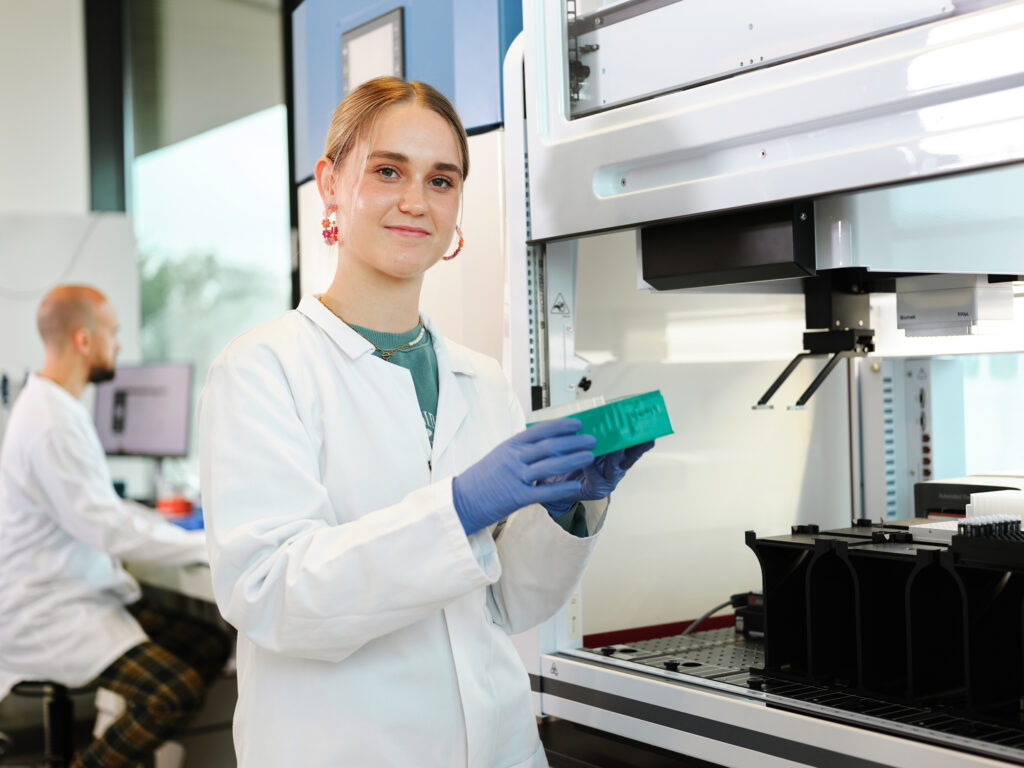
Comprehensive molecular diagnostics closer for more patients thanks to price reduction
Hartwig Medical Foundation reduces the price of its OncoAct Whole Genome Sequencing (WGS) service as of January 1, 2026. This …
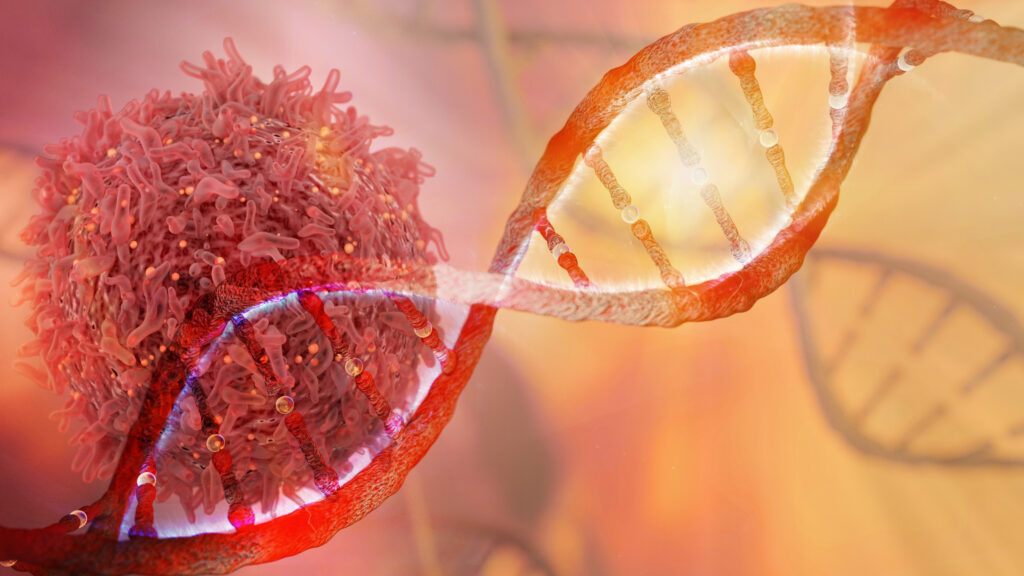
Biomarkers Reveal Which Cancer Patients Won’t Benefit From Treatment
Researchers from Vall d’Hebron Institute of Oncology identify genomic signals predicting non-response to cancer therapies in collaboration with Hartwig Medical …

22 impactful scientific publications in 2022
In 2022, research groups from all over the world published 22 scientific papers in which data from the Hartwig Medical …
The number of WGS samples Hartwig Medical Foundation has is quite unique in the research field and is rapidly growing. It amounted to 3.500 samples when we started and it’s already over 5.000 now.