Antoni van Leeuwenhoek hospital brings comprehensive DNA test closer for all cancer patients

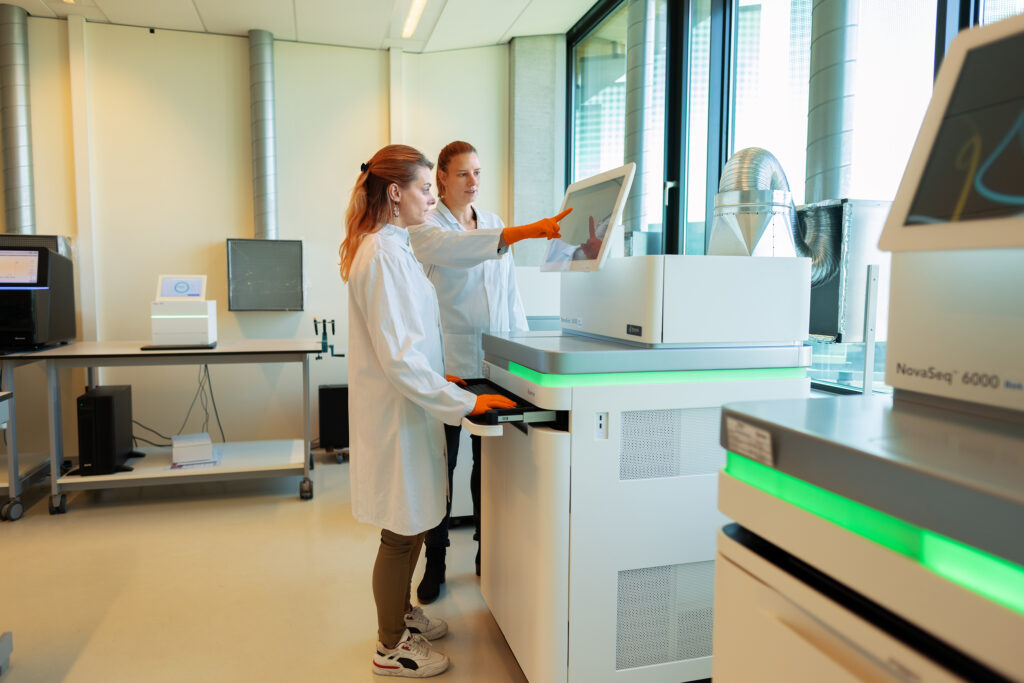
This year, Antoni van Leeuwenhoek hospital joined forces with Hartwig Medical Foundation to deploy the most comprehensive DNA test available in the world for regular diagnostic procedures. This test identifies which patients are suited for standard cancer treatments, and which patients could benefit from experimental treatments. On February 10, the Dutch House of Representatives will discuss how this test can be made available to all cancer patients in the Netherlands as soon as possible.
“A single test is enough to conduct a comprehensive analysis of the entire DNA of the tumor,” explains Emile Voest, an internist-oncologist at Antoni van Leeuwenhoek. “We examine the mutations in DNA to find clues to the best possible treatments, including both existing treatments and the treatments of the future.” The test can currently only be requested for Antoni van Leeuwenhoek patients with metastatic or suspected metastatic cancer who also have an indication for a broad molecular diagnostic procedure.


From research to practical application
The comprehensive DNA test was developed together with Hartwig Medical Foundation, whose goal is to ensure that every cancer patient receives the right and most effective treatment. The test has been performed on thousands of patients in recent years and provides more and better information than other tests used to date. “We are proud that, together with Hartwig Medical Foundation, we have made the comprehensive DNA test ready for use in standard diagnostics,” says Gerrit Meijer, Principal Investigator at Antoni van Leeuwenhoek. “Moreover, the test produces important information for a continuously learning healthcare system, in which we will be able to treat future patients even more effectively.”
One test for today and the future
“We want to extract the maximum amount of information from the patient’s tumor,” explains Antoni van Leeuwenhoek pathologist Kim Monkhorst.“This test is the best available tool for that. We only need one tissue sample with sufficient tumor cells. Because we literally analyze the entire genome, including parts of the DNA that show mutations of which we don’t yet know the importance, this test is always up to date and future-proof. This means that new discoveries can also lead to potential new treatments for patients who were tested in the past.”
Emile Voest: “Our research has proven that it is workable in practice and that it is of great importance to our patients. We are gaining valuable information about patients and expect to be able to target treatments more effectively in the near future. We are also building a database from which we will learn even more about cancer.”
Policy document consultation
From 9.30 a.m. to 12 noon on February 10, Parliament has discussed the draft policy document presented by Ministry of Health, Welfare and Sport committee members Sazias, Van den Berg and Veldman on the urgency of introducing a comprehensive personal DNA profile.
Points for decision:
- Plan of action to accelerate the incorporation of best practices in proven effective care in the standard healthcare system.
- Task force charged with examining what is needed to make comprehensive DNA testing available, as soon as possible, to every cancer patient prior to a treatment decision.
All news
Also read

Single WGS analysis of metastases is sufficient in most cases
DNA analysis of the tumor is of crucial importance to determine treatment options for patients with metastasized lung cancer. But …

GenomeWeb: ‘Dutch Team Looks to Drug Repurposing to Improve Patient Outcomes, Lower Costs’
The project is an attempt to address the rising healthcare costs associated with new cancer drugs and to identify biomarkers …
Whole genome sequencing is reliable, has added value, and can be embedded perfectly into everyday pathology diagnostics
Source: website Netherlands Cancer Institute With the rapidly expanding tableau of (increasingly tumor-agnostic) targeted therapies, genome-driven cancer care has become …

We are proud that we succeeded in implementing the complete DNA test in standard of care diagnostics, together with Hartwig Medical Foundation. Moreover, the test produces vital information for a learning healthcare system in oncology. We will be able to treat future patients even more effectively.